Nissan Fuel Filter Buyer's Guide
Fuel is full of impurities, like rust particles, dirt, and other types of debris. Your engine needs clean fuel. Otherwise, the fuel injectors or carburetor jets will get clogged up. That’s why your car has a fuel filter.
In most modern cars, the fuel filter (in the form of a filter screen) is built into the fuel pump. That means they get replaced along with the fuel pump assembly. If you have an older Nissan, you may have a fuel filter that’s a separate unit. In that case, this buyer’s guide is for you.
If you’re wondering what a fuel filter is and how to maintain one in your car, you’ll find the information you need below.
What Is A Fuel Filter And Why Is It Important?
A fuel filter is a small cylindrical part. Depending on your Nissan model, you'll find the fuel filter in one of the following places:
- In the engine bay
- In the fuel line between the fuel tank and engine bay
Nissan fuel filters have a pretty straightforward design. A Nissan fuel filter comes with:
- A housing that's either metal or clear plastic
- Paper filter media inside the housing
- Two openings - one allows fuel to enter, the other allows fuel to exit
For a more thorough description of fuel filters and how they work, check out this post.
When To Replace A Nissan Fuel Filter
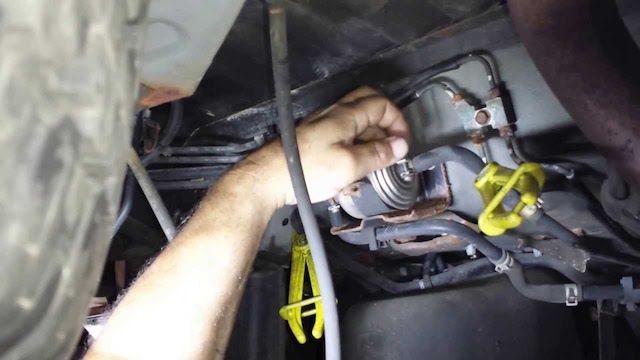
Image Credit: FixyourNissan
Under normal circumstances, Nissan fuel filters last about 20K-40K miles. If you're not sure whether your fuel filter has gone bad, this diagnostic guide will help you. All you need to do is:
- Find the fuel filter and then give it a visual inspection. If the filter looks old, beat up, and/or rusted, it's likely bad.
- Remove the filter and then blow into one end of the filter. If you feel air coming out of the other and, the paper media inside still has some life. It doesn't mean that the entire unit is still in good shape, though.
When in doubt, replace the fuel filter. It's important for your vehicle to get clean fuel at all times.
Should You Get An OEM Or Aftermarket Replacement Fuel Filter?
If you want a quality fuel filter that will perform optimally with your Nissan for 20K-40K miles, get an OEM filter. This post explains why an OEM fuel filter is a much safer investment than an aftermarket filter. Aftermarket fuel filters are a hit or miss. Fuel filters are important to the health of your engine. So it's not worth taking a gamble with an aftermarket filter just to save a couple of bucks.
Do you have a question that’s still not answered in this guide? We’ll be happy to answer it for you. Just contact us here!