

Engine Oil Color Guide: What Is Your Nissan Trying to Tell You?
Your Nissan’s engine oil is like a health report card for your car - if you know how to read it. Most drivers don’t know exactly what color their oil should be at different stages of its life, but that’s okay. We’re here to clear that up.
If you pull the dipstick and see something that looks a little 'off,' don’t panic immediately. This Nissan oil color guide will help you decipher whether your oil is behaving normally or if your engine is trying to wave a red flag.
Understanding Nissan Engine Oil Color
Fresh, clean engine oil is typically a translucent amber color. But just because it changes color doesn’t always mean you have a disaster on your hands.
What Color Should My Nissan's Engine Oil Be?
Oil color changes with use, and not every change is a cause for concern. As engine oil ages, it naturally darkens due to heat, heat cycles, additives doing their job, and contaminants. That’s why it’s important to recognize the patterns specific to your vehicle. Here is how typical oil color changes over time:
| Mileage Since Oil Change | Oil Color | Is This Normal? |
| 0 – 1,000 miles | Amber / Light Brown | Yes |
| 1,000 – 3,000 miles | Medium Brown | Yes |
| 3,000 – 5,000+ miles | Dark Brown to Black | Oil and oil filter change may be due |
When To Be Concerned: Interpreting Your Oil Color
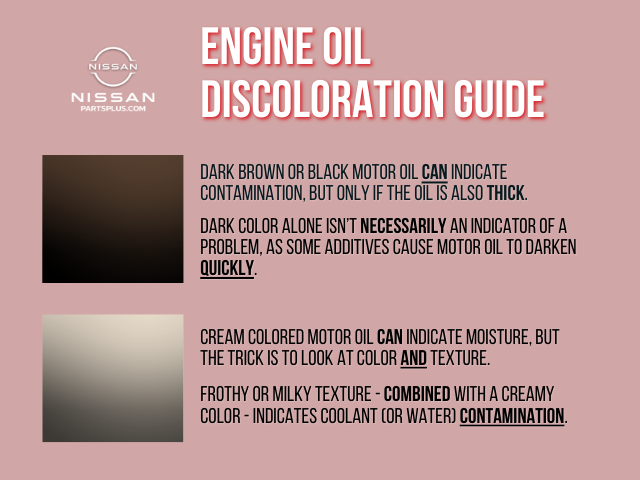
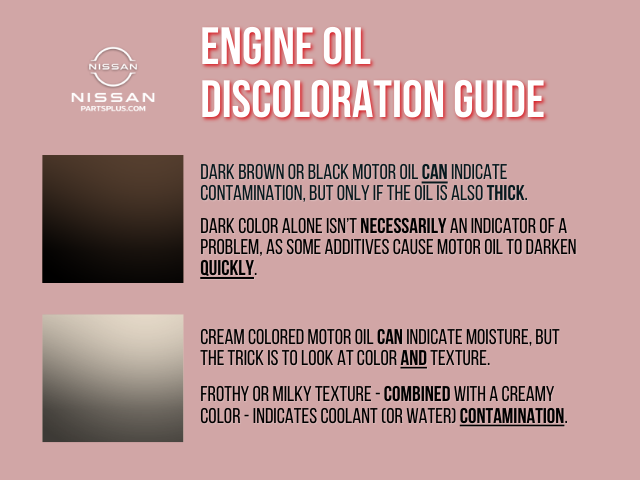
Dark engine oil can be unsettling, but black oil isn’t always bad. The key is to observe color patterns after each oil change. However, certain oil colors, smells, or textures do signal underlying issues.
Don’t just judge by color alone; combine it with smell, mileage, and your driving conditions to make the right call. Here is what to watch for:
What Does Milky Oil Mean?
Milky engine oil will have a creamy, frothy, or chocolate milk appearance.
- Possible Meaning: This usually indicates coolant contamination or moisture buildup. It could be a sign of a head gasket leak or coolant mixing with the oil - a serious issue.
- Action: Get your Nissan checked ASAP. Watch for other warning signs like white exhaust smoke, coolant loss, or an overheating engine.
Is Black Oil Bad for Nissan Engines?
Are you finding your oil is dark right after an oil change? It’s not always bad. However, if the oil is also thick, sticky, or sludgy, you may need to be concerned. You might also see dark brown oil shortly after a change if:
- Possible Meaning: You didn’t get all the old oil out during the drain - or - your new oil is darkening quickly due to internal engine deposits being cleaned out.
- Action: If your oil turns brown quickly, just monitor it. It’s typically harmless unless it’s accompanied by a grit or sludge.
Thick, Sludgy Oil
Thick oil can result in a smelly or smoky exhaust and poor performance.
- Possible Meaning: Sludge is caused by dirt, soot, or significantly extending your oil change intervals. It is common after heavy off-road driving, prolonged high-heat operation, or simply ignoring the maintenance schedule.
- Action: Replace the oil and the oil filter immediately.
Why Does My Oil Smell like Gas?
Sometimes the oil color looks normal, but it smells strongly of fuel when you remove the oil cap.
- Possible Meaning: This is usually fuel dilution, caused by frequent short trips where the engine doesn’t get hot enough to burn off excess fuel in the crankcase. It can also result from injector issues or incomplete combustion.
- Action: If the problem persists or the oil level seems to be rising on the dipstick, have it checked by a mechanic.
What You Need To Know About Hybrid Vehicles
If you drive a Nissan hybrid, your engine operates differently than a traditional gas-only vehicle, and so does the oil.
- Shorter combustion cycles: The gas engine in a hybrid doesn’t run constantly, so the oil may take longer to reach optimal operating temperature.
- Condensation risks: Frequent stop/start cycles can sometimes lead to moisture buildup, slightly increasing the chance of milky-looking oil if the car isn't driven long distances.
- Regular checks are still vital: Even if the gas engine runs less, hybrids still need annual oil changes. Oil degrades over time, regardless of mileage.
How To Fix Discolored Engine Oil

If you’re dealing with unusual engine oil discoloration or odd smells in your Nissan engine oil, here is the game plan:
- Routine darkness: Just monitor it. Follow your regular oil change intervals.
- Milky or Frothy Oil: Have your Nissan inspected by a certified mechanic immediately.
- Bad Smells or Sludge: Change the oil and filter immediately, then monitor for leaks or contaminants.
Using old or cheap oil can result in increased engine wear and faster degradation. You may save a few dollars upfront, but the long-term costs of engine repairs are high. Always use the correct oil weight recommended in your owner’s manual and stick to the schedule.
Oil Color Quick Reference Guide
| Oil Color/Condition | Possible Meaning | Action |
| Black | Oil fully used; may contain contaminants | Check texture/smell; likely time for an oil change. |
| Brown After Oil Change | Old oil not flushed out properly | Replace oil again; ensure a complete drain first. |
| Frothy / Creamy | Water/coolant contamination (possible head gasket leak) | Get your Nissan checked by a mechanic immediately. |
| Thick / Sludgy | Missed oil changes, regular hard driving | Replace the oil and oil filter. |
| Smells Like Gas | Fuel dilution, injector issue | Mechanic should test compression/fuel system. |
OEM Oil Maintenance Components Nissan Parts From Nissan Parts Plus

Whether you just need a replacement oil filter, air filter, or other maintenance components, Nissan Parts Plus has the perfect OEM parts for you at wholesale prices. We offer a free VIN lookup tool so you can be 100% sure you’re getting the right part for your specific model.
At NissanPartsPlus.com, we have the factory-spec, genuine OEM Nissan spark plugs your car was built for. Shop our full selection of spark plugs today and keep your engine running like new! Contact us if you have any questions, and keep your Nissan running for the long haul!