

A Guide To Every Brake System Part
Your Nissan’s brake system is the most important safety system in your car. Without a well maintained brake system, you can’t stop your car on a dime. Your Nissan’s brake system contains many different components that work together. Each component plays a vital role in stopping your vehicle.
If you want to learn more about brake systems and the components that go in them, you came to the right place. This breakdown of a standard Nissan brake system has all the information you need about brake systems.
Two Different Types Of Brakes
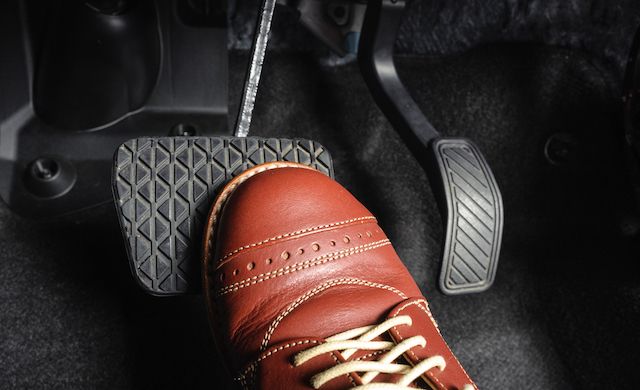
All brake systems convert energy from one form to another. For vehicles, the brakes convert kinetic energy (forward motion) into heat, which is another type of energy. A brake system has to absorb and dissipate heat in order to be effective. There are basically two different types of automotive brakes, both of which we’ll cover in this guide:
- Disc brakes
- Drum brakes
The main difference between both types of brakes is how the braking force is applied.
In a disc brake system, the disc (called the rotor) rotates with the wheel. To stop the wheel, the disc must stop. Once you hit the brake pedal, two brake pads squeeze the rotor and create enough friction to slow down or stop the rotor.
In a drum brake system, the drum rotates with the wheel. To stop the wheel, the drum must stop. The setup is similar to that in a disc brake system. Yet, the drum is designed much differently. The process to stop a drum is different, too. When you hit the brake pedal, the brake shoes press outward against the inner surface of the drum. The brake shoes create enough friction to slow down or stop the drum from rotating.
Disc brakes are more common these days. Most modern cars have disc brakes on all four wheels. Other cars come with disc brakes on the front axle, and drum brakes on the rear axle.
Disc Brake Components
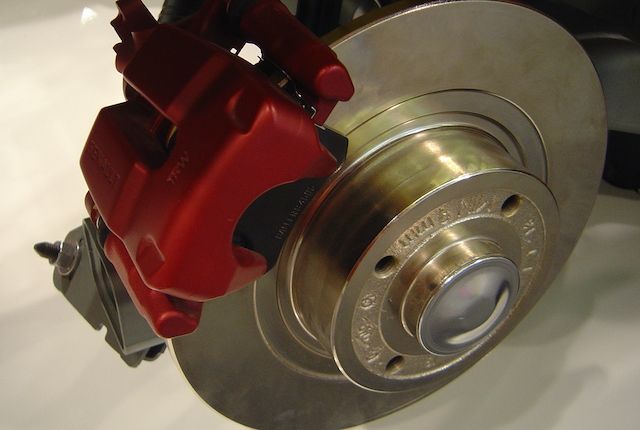
The disc brake system is a modern and effective solution. It has a straightforward design with several components. Each one serves an important purpose. Let’s discuss the components in more detail:
1. Brake Rotor
Typically, there is one rotor at each wheel. A rotor is a round metal disc that's about 12" in diameter, and about 1" wide. They are made from cast iron that is machined to a very flat surface where the brake pads will make contact. You can read more about rotors here.
2. Brake Pads
On each side of a rotor, there's a brake pad. So there are two brake pads for each rotor. When you stop the vehicle, the brake pads press against the rotor. This creates enough friction to get it to stop turning.
Like the rotor, the brake pad is a rigid part. It has two major components:
- A metal backing plate
- Friction material that is about 12 millimeters thick when the pad is new
Every time the brake pads press against the rotor, the friction material wears away a bit. The less friction material a brake pad has, the heat it can absorb, which makes it less effective at stopping your vehicle. That's why you need to replace your brake pads every 40K-50K miles.
3. Caliper
The caliper is an assembly mounted on the rotor with a bracket. It "hugs" the upper side of the rotor. Nestled inside the caliper, on each side of the rotor, is a brake pad. The friction material side of the brake pad faces the rotor. The caliper's job is to press the brake pads against the rotor when you press on the brake pedal.
A caliper has a variety of components:
- Pistons that push the brake pads against the rotor when the brakes are applied. Some calipers have one piston. Others have two or more pistons.
- Rubber piston seal that retracts the piston and prevents brake fluid from leaking out
- Bleed valve that allows the caliper to be bled when they are serviced
- Dust boot that prevents contaminants from entering the brake system
- Anti-rattle clips to keep the brake pads from rattling when not braking
Drum Brake Components
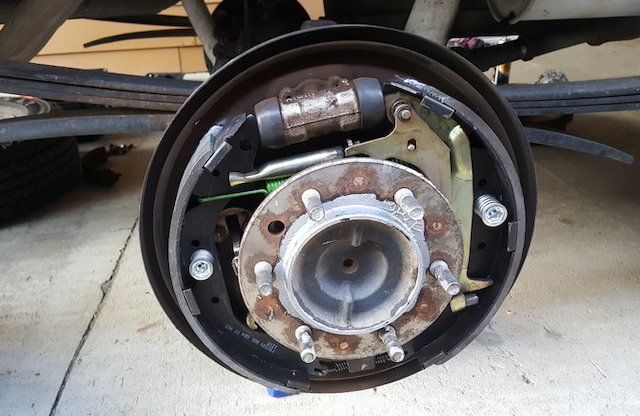
Image Credit: Tacoma World
Drum brakes have been around for much longer than disc brakes. The drum brake system design is not as effective as the disc brake system because it can't absorb or dissipate heat as quickly as disc brakes. Here are the main components in a drum brake system:
1. Brake Drum
A brake drum is a cylindrical drum. It attaches to the hub just behind the car's wheel, and rotates with the wheel. Brake drums are made with cast iron. This makes brake drums resistant to wear for a long period of time. It serves the same purpose as a brake rotor. It's a rigid part that stops the wheel when friction is applied to it.
2. Brake Shoes
A drum brake has two brake shoes:
- The leading shoe
- The trailing shoe
A brake shoe is a curved part with two major components:
- Metal backing
- Brake lining (friction material)
Brake shoes serve the same purpose as brake pads: to provide the friction needed to stop the wheel. When you apply the brakes, the brake shoes are pressed against the inside of the drum to get it to stop rotating.
The leading shoe and the trailing shoe are very similar. They are mounted slightly differently to minimize vibration that occurs when braking.
3. Self Adjuster
Within the drum brake system is a self adjuster. It's an automatically adjusting device that keeps the brake shoes positioned correctly as they wear.
The brake shoes must remain in the correct position at all times. If they’re too close to the drum, they can “grind” against the drum and cause irreversible damage. If they’re too far from the drum, more fluid is needed to push the pistons farther up. This will cause your brake pedal to sink closer to the floor. With the brake shoes in the correct position, the drum brakes’ performance will remain optimal.
When the gap between the brake shoes and the drum gets big enough, the adjuster pushes the brake shoes back up to its correct position. The adjuster has several components:
- Adjusting lever
- Threads
- Adjuster gear
So when the gap gets too big, the adjusting lever rocks and advances the gear by one tooth or until the gap is appropriate.
4. Backing Plate
A backing plate serves as a foundation for the drum brake. It's a steel plate that has the wheel cylinder, brake shoes, and other braking hardware mounted on it. With the presence of the backing plate, the drum rotates while everything else stays put.
5. Wheel Cylinder
Positioned at the top of each wheel, the wheel cylinder is a component of the hydraulic system. It contains two pistons. When hydraulic pressure is applied, the pistons are pushed outward against the brake shoes.
Common Components
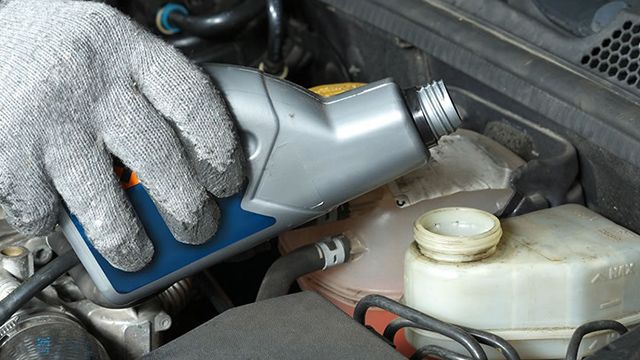
Some components are found in either type of brake system:
1. Brake Fluid
The brake fluid is the "messenger" between the brake pedal and the brake system. When you hit the pedal, the brake fluid puts pressure on the pistons. The pressure causes the pistons to press the pads against the rotors. The presence of brake fluid makes your brake system a hydraulic system.
Brake fluid is a special formulated liquid chemical solution. Its formulation is optimized to work in brake systems for a long period of time. For brake fluid to work correctly, it must:
- Have the right viscosity
- Have a high boiling point
- Resist corrosion
To maintain the brake fluid in your Nissan, you must replace it every few years. If any part in your brake system has a leak, brake fluid may leak out. This reduces the hydraulic pressure. When it gets bad enough, your brake system won't have enough force needed to create braking power. So it's important to service your brakes, check for leaks, and replace the brake fluid every now and then.
2. Reservoir
As the name suggests, the reservoir holds a reserve of brake fluid. If there is a leak in the brake system, the reservoir holds enough fluid that hopefully the leak will be spotted and repaired before the brakes fail.
3. Master Cylinder
Located directly beneath the brake fluid reservoir is the master cylinder. When you step on the brake pedal, a piston within the master cylinder pushes brake fluid through the brake lines.
4. Vacuum Booster
A vacuum booster is located just behind the master cylinder. When you push on the brake pedal, the vacuum booster boosts the power applied to the master cylinder. It makes it easier to apply full power to the brakes.
5. Brake Lines And Hoses
The brake lines are metal tubes that serve as the link between the master cylinder and the brake hoses. Brake hoses are rubber hoses that connect the brake lines to the calipers. Brake hoses are rubber because they need to be flexible enough to allow the rotors and calipers to move up and down with the wheels.
When the master cylinder pumps out the brake fluid, the brake fluid is transported to the cylinders via the brake lines and hoses. If your brake pedal feels spongy, there's a good chance that air has gotten into the brake lines.