

Nissan Shocks And Struts Buyer's Guide
If you're looking for a one-stop information source about Nissan shocks and struts, you came to the right place. This buyer's guide has all the answers and resources you need.
What Are Shocks?
If you remove one of your wheels, you'll see an elongated hydraulic tube set up vertically. The top end of the tube is attached to the car body or frame, and the bottom end is attached to the axle or control arm. It's one of the two or four shocks on your car. Some cars only have shocks at the rear, and some have them at all four corners. The point of having shocks on your Nissan is to keep the ride quality smooth and to keep the tires firmly planted on the road. This article offers a more thorough explanation of what shocks are and why they're important.
What Are Struts?
Most Nissan models have struts at the front wheels instead of shocks. Basically, struts are similar to shocks, except they also support the weight of the car. A strut is made up of the following parts:
- A shock
- A spring (in most cases)
- All of the necessary brackets and mounts
For a more detailed description of struts and how they work, check out this article.
How To Diagnose Failing Shocks
If you have a hunch that your shocks are going bad, let this diagnostic guide come to the rescue! It will walk you through the process of visually inspecting your shocks and conducting the bounce test.
OEM Vs. Aftermarket Nissan Shocks
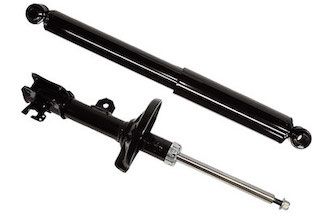
There are two types of replacement shocks: OEM and aftermarket. OEM stands for "Original Equipment Manufacturer". OEM shocks are made by the same manufacturer that made the shocks that came with your car. Aftermarket shocks are designed and built by third party companies.
If you're wondering which type is more reliable and offers more value, OEM is the answer. It's because:
- OEM shocks fit your Nissan perfectly
- OEM shocks are manufactured to the exact same specs as the shocks that came with your Nissan
- OEM shocks are built with quality materials
- OEM shocks come with a 12-month/12K-mile warranty
- OEM shocks can be as affordable as aftermarket shocks
For a more detailed explanation about why OEM shocks are a better investment than aftermarket shocks, check out this article.
How To Replace Nissan Shocks
If your shocks are on the fritz, you don't have to dole out hundreds of dollars to have them replaced. You can easily replace your own shocks right at home. The process basically involves lifting your car, undoing the top and bottom bolts holding the shocks in place, and then bolting the new shocks in place. It's a simple and straightforward process that's outlined here.
How To Replace Nissan Struts
Replacing struts is a little more complicated than replacing shocks, but this tutorial should help you along the way.
Feel free to contact us if you need additional information about Nissan shocks and struts. You can reach out to us via our contact form, and we'll get back to you as soon as we can.