

How To Detect A Bad Wheel Bearing
If you’ve noticed a strange humming or growling sound coming from your tires that seems to grow louder as you accelerate, you might be dealing with a failing wheel bearing. While the sound can be unsettling, diagnosing and fixing the issue is a manageable task for knowledgeable DIYers.
Replacing wheel bearings used to be a real headache, but it is now a far more approachable task. We'll explain why things have changed, and how you can accurately diagnose a bad wheel bearing to avoid replacing the wrong parts.
What Does a Wheel Bearing Do?
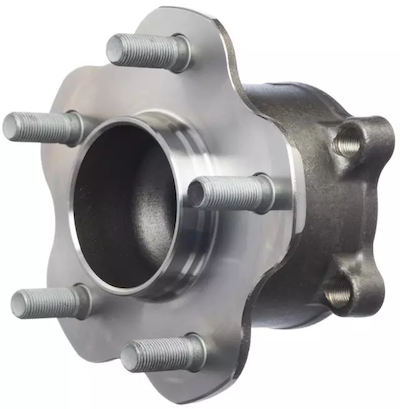
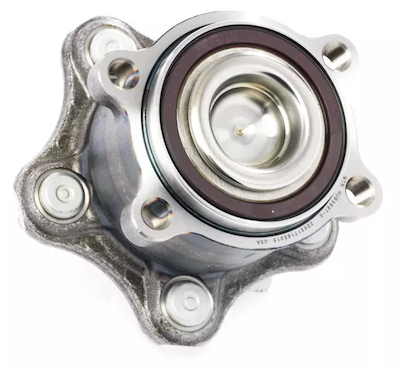
In simple terms, a wheel bearing is a set of steel balls or rollers held together by a metal ring. It sits inside the wheel hub and allows the wheel to spin smoothly with as little friction as possible. Without functional bearings, the friction would create enough heat to damage the axle and eventually cause the wheel to seize or even fall off. A wheel bearing allows the wheel to spin freely while supporting the entire weight of the vehicle.
What Are the Symptoms of a Bad Wheel Bearing?
Wheel bearings are designed to be incredibly durable, typically lasting between 85,000 and 100,000 miles or even longer. However, exposure to water, salt, or pothole damage can lead to premature failure. The most common symptoms of a failing bearing include:
- Growling or Humming Noise: This is the most distinct sign. The noise usually changes pitch or volume when you turn the steering wheel or increase speed.
- Steering Wheel Vibration: As the bearing degrades, it can cause a wobble that translates into a vibration in the steering wheel.
- Vague Steering: If the bearing has play or looseness, the car may feel like it is wandering, or the steering may feel less responsive.
- ABS Warning Light: Many modern hub assemblies have integrated speed sensors; if the bearing fails, it can damage the sensor, triggering a dashboard light.
Should You Replace Just the Bearing or the Complete Hub?
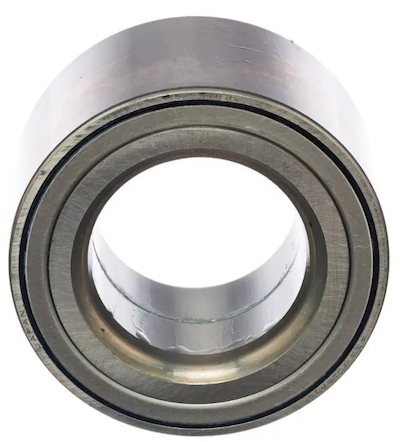
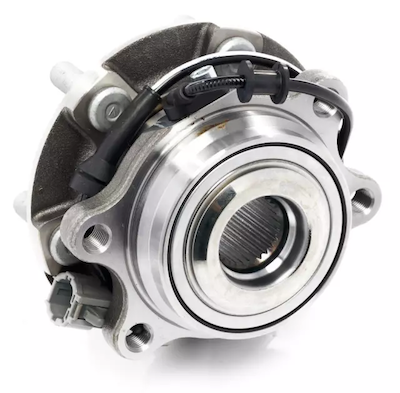
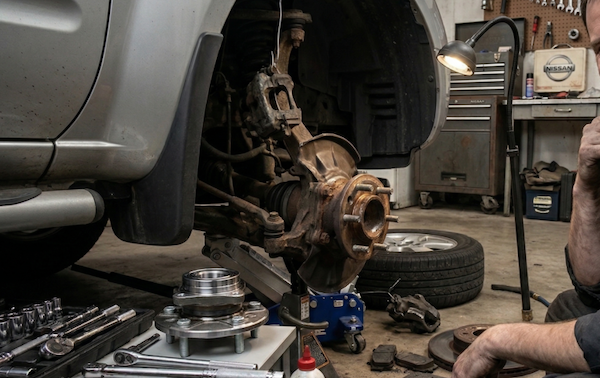
Modern vehicles have simplified this repair by using complete hub assemblies. Instead of needing a shop press to force a bearing into a spindle, the bearing and hub are now a single, bolt-on unit. This makes replacement significantly faster and more straightforward.
Today, most Nissan vehicles utilize a complete wheel bearing and hub assembly. Standalone wheel bearings are still available but should only be used when replacing a complete hub assembly is not an option. In most cases, the labor costs to replace a wheel bearing will outweigh the higher cost of a hub assembly.
Because these parts are manufactured as a single unit, you cannot - and should not - try to replace just the bearing.
When replacing them, you don't necessarily have to replace both sides of an axle at once, but it is recommended, and may save you from a similar repair a few months later. While wheel bearings fail independently due to road impacts or seal failures, if your vehicle has already logged many miles, the other side is likely to fail soon.
How Much Does a Replacement Hub Assembly Cost?
The cost of a replacement depends on your specific model and whether your vehicle is 2WD or 4WD. At Nissan Parts Plus, we offer genuine OEM hub assemblies at wholesale prices, which are significantly more affordable than dealership retail prices. Explore the links below to find links to some of our most popular wheel hub assemblies.
| OEM Nissan Hub Assemblies | |
|---|---|
| 2005-2025 Xterra/Pathfinder/Frontier (4WD) | Front Hub Assembly |
| 2014-2017 Quest (FWD) | Rear Hub Assembly |
| 2004-2011 Armada/Pathfinder | Rear Hub Assembly |
Can You Replace a Bad Hub Assembly Yourself?
Yes! Because modern bearings come as a pre-assembled hub unit, the job is essentially bolt-on. While the part itself might be slightly pricier than a loose bearing, you save hundreds of dollars in professional labor costs. Plus, replacing a complete hub assembly saves time and eliminates the need for expensive specialized tools like a hydraulic press. For an intermediate DIYer with a jack, stands, and a basic socket set, this is a very doable project.
Where Should You Buy a Replacement Hub Assembly?
When it comes to a component that is an integral part of your vehicle’s safety, quality is non-negotiable. Aftermarket bearings often use inferior steel or lower-grade grease, leading to failure in just a few thousand miles. They certainly aren’t built to meet Nissan’s strict manufacturing standards. Buying OEM parts from Nissan Parts Plus ensures:
- Perfect Fit: No modifications required; it bolts directly to your spindle.
- Longevity: OEM parts are built to the original factory specifications.
- Wholesale Pricing: Get the quality of a dealership part without the markup.
Trust Nissan Parts Plus for Your OEM Hub Assemblies
Detecting a bad wheel bearing early can prevent more costly repairs to your suspension and tires down the line. Look out for that tell-tale growling noise and address it quickly. By choosing a complete hub assembly and doing the work yourself, you can restore your Nissan’s smooth, quiet ride for a fraction of the shop price.
Ready to get started? Find the exact hub assembly for your Nissan by using our VIN search tool to ensure a perfect fit every time. We offer fast shipping and a huge inventory of genuine Nissan parts to get you back on the road safely.