

How To Diagnose A Failing Camshaft Position Sensor
The camshaft position sensor is an important part. It makes sure that the valve timing stays accurate. This post offers a comprehensive explanation of what a camshaft position sensor is. It also explains why the sensor is important.
Nissan camshaft position sensors should last the lifetime of the vehicle. Yet, they can fail early from:
- Damage from extreme engine or excessive moisture
- Oil build up from an oil leak
- A car accident
- Damaged sensor wires
- A secondary issue
Have you noticed the signs of camshaft position sensor failure? It’s important to diagnose the issue ASAP. We'll help you with that.
What Happens When Your Camshaft Position Sensor Completely Fails?
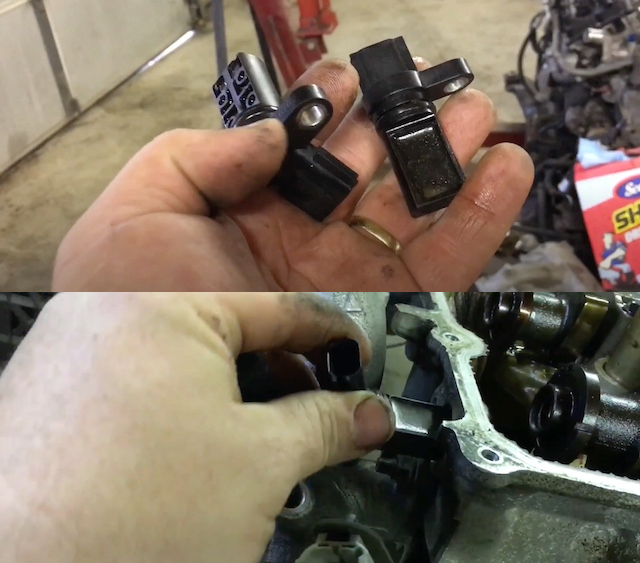
Image Credit: Joe S.
The short answer? The engine dies. Read on for the long answer.
When your camshaft position sensor starts to fail, it starts to send weaker signals to the ECU. That signal will only get weaker and weaker over time. One day, the sensor will switch off, and the ECU will no longer receive a signal. When the sensor switches off, the engine will switch off too. You won't be able to turn the engine back on until you replace the camshaft position sensor. So it's very important to replace the camshaft position sensor as soon as you notice the signs of failure.
Speaking of replacing the sensor, it's always better to use OEM replacements. This goes for any car part, including all sensors like: oxygen sensors and camshaft position sensors.
You can't go wrong by ordering from us. We carry genuine OEM Nissan camshaft position sensors at wholesale pricing. You'll save quite a bit of money by ordering from us. For example, you'll save over $40 on this camshaft position sensor for some 2000-2019 models. Check out the catalog here!
Signs Of A Bad Camshaft Position Sensor
The following signs make it clear that there may be something wrong with the camshaft position sensor:
- Rough idling
- Frequent stalling of the engine
- Less engine power
- Worse fuel economy
- Sluggish acceleration
Keep in mind that these signs can be a result of another issue within the engine. The best thing to do is get the check engine code. If the code reads as P0340, then the camshaft position sensor is the issue.
How To Confirm That Your Camshaft Position Sensor Is Bad
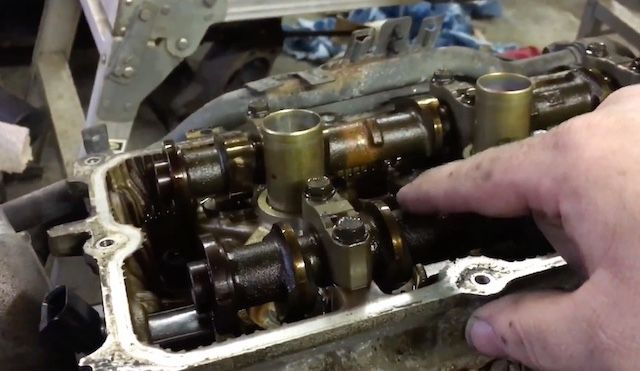
Image Credit: Joe S.
Camshaft position sensor testing the right way means reading the resistance of the part. If the resistance is too low, then the sensor isn't working right.
Before starting:
- Make sure that your car battery is fully charged
- Gather together the following tools: 10mm socket and a multimeter or another voltage measuring device
When you have everything ready, take the following steps:
- Find the camshaft position sensor. (On most Nissan models, you can find it behind the cylinder head. You may need to remove the intake manifold and/or upper plenum to access it.)
- Remove the bolt holding the camshaft position sensor in place.
- Remove the sensor.
- Disconnect the camshaft position sensor connector and the camshaft position sensor wiring harness.
- Hold the sensor plug. Make sure that the plug is facing toward you with the retaining clip on top. With the sensor in this position, you can see the pins in the correct order: 1, 2, and 3 starting from the left. You want to read the resistance values between these pins. Your goal is to see if every combination returns a value. If at least one combination returns a 0 or null value, then the sensor is bad.
- Connect the multimeter to the sensor and read its resistance with all of the following pin combinations: Pins 1 and 2, Pins 1 and 3, Pins 2 and 3.
If any of these combinations has no resistance (0 or null value), the sensor is bad. In that case, you need to replace it as soon as possible.
Do you have any questions about checking the camshaft position sensor on your Nissan? You're welcome to contact us!