

How To Diagnose A Failing Brake Pad
Brake pads are a vital part of your Nissan's braking system. If your Nissan's brake pads wear down or fail otherwise, your car will have trouble stopping. That can put you in quite a dangerous situation.
It's important for you (and any other car owner) to know how to diagnose a failing brake pad. If you're able to diagnose the issue on your own, you can replace the brake pads ASAP. This will keep you, your passengers, and other motorists safe.
In this guide, we'll show you how to diagnose a failing brake pad.
The Most Common Ways Your Brake Pads Can Fail
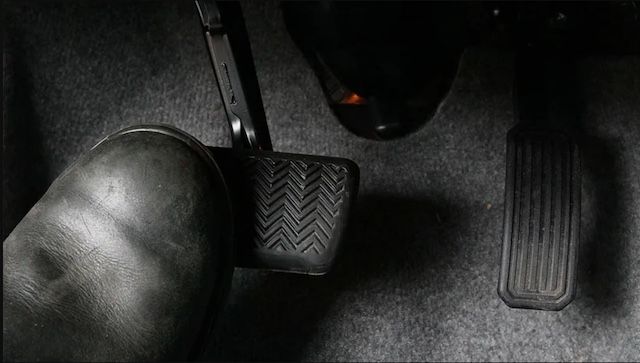
Brake pads should last between 20,000 and 65,000 miles. That's a massive range. It's because many different factors determine the lifespan of brake pads, including:
- Driving style (if you brake aggressively or ride the brakes often, your pads won't last that long)
- The type and quality of brake pads (for example, ceramic brake pads last longer than organic brake pads)
- Type of trip (brake pads used in stop-and-go traffic don't last as long as brake pads used for highway driving)
- Compatibility with rotors (brake pads that are compatible with the rotors last longer than those that aren't)
- Manufacturer of the brake pads (OEM brake pads usually last longer than aftermarket brake pads)
Your Nissan's make and model will also determine brake pad lifespan. If you own a 2007-2010 Nissan Altima, for example, your brakes should last about 40,000 miles to 65,000 miles.
The most common reason brake pads fail is wear and tear. The friction material on brake pads wears down over time. Worn brake pads are thin and have a shiny surface. This makes it difficult for them to grip the rotor effectively. If you let your brake pads wear down too much, the metal backing gets exposed. That part of the brake pad cannot stop the vehicle. Instead, it'll damage the rotors. If you let it get that bad, you'll have no choice but to replace the damaged rotors too.
Another common reason brake pads fail is sticking caliper pistons. This causes irregular brake pad wear. When your Nissan has sticking caliper pistons, the caliper can't release the brake pads properly. It'll push the brake pad against the rotor when it shouldn't be in contact with it. This will wear down your brake pads quickly and make them unevenly worn. It may also fail to push the brake pad out. In either situation, your car can't stop as effectively.
Signs Of Failing Brake Pads
There are a few telltale signs your Nissan's brake pads have worn down or failed. If you detect any of the following issues, check your brake pads ASAP:
- You hear grinding or squealing when you apply pressure to the brake pedal
- Your brake pedal feels much harder than normal
- Your brakes don't stop the car as quickly as they used to
- The brake pad warning light appears on your dashboard
These signs don't necessarily mean you have to replace the brake pads immediately. But if you notice any of these signs, your Nissan should definitely have its brakes checked out as soon as possible.
How to Diagnose Brake Pad Failure
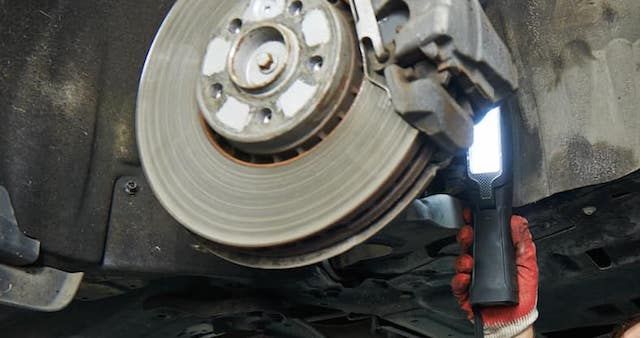
It's easy to tell if your brake pads are failing. Pretty much anyone can do it with the right tools. The key to diagnosing a brake pad issue is to look for any uneven wear and to find out how much life the brake pads have left.
Accessing Your Brake Pads
To check your brake pads, you need to see them. That means you need to:
- Lift your vehicle
- Remove the wheels
- Remove the caliper from the bracket
- Take the brake pads out of the caliper
Some brake calipers come with a window on the back that allows you to see how much brake pad friction material is left.
What To Look For
Measure how much pad material is left. You can do this with one of the following tools:
- Vernier caliper
- Micrometer
- Brake pad gauge
You need to make sure that the brake pad thickness is above the minimum thickness. If it is, it has some life left.
Also, pay attention to how much pad material you have left on both sides of the brake pad. If one side has more friction material than the other, it means that pad was worn unevenly. Some brake pads have a wear indicator groove. It'll tell you when your brake pads are worn down to the safe minimum. Once the wear hits the bottom of the groove, you should definitely replace your brake pads.
Most brake pads have a minimum thickness of 3 or 4 mm. A general rule of thumb is:
- If the pad thickness is between 8 and 12 mm, it has plenty of life left.
- If the pad thickness is between 4 and 6 mm, it has some life left but it needs to be replaced soon.
- If the pad thickness is 3 mm or under, replace it immediately.
Check Your Rotors Too
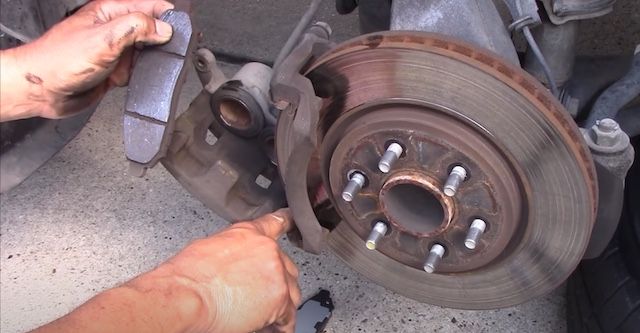
Image Credit: SelfTaskit
While you're in there, take the time to visually inspect your rotors. Do this especially if the brake pads are too worn down. It's possible that your failed pads damaged the rotors too. Here's a good guide on diagnosing brake rotor failure.
Get Wholesale Pricing On OEM Nissan Brake Pads
If you need replacement brake pads, look no further than NissanPartsPlus.com. We offer wholesale pricing on all kinds of genuine OEM Nissan parts, including brake pads. Here are a couple of our best sellers:
- Brake pads for select 2010-2020 Nissan models
- Brake pads for 2013-2020 Nissan Murano and Pathfinder vehicles
Please contact us if you need help finding the right brake pads for your Nissan.