What Is An Engine Control Module (ECM) And Why Is It Important?
The engine control module (ECM) is central to an efficient and low-emission internal combustion engine. Without an ECM, modern cars simply could not meet today’s strict fuel economy and tailpipe emissions standards. Read on to learn more about the function of this important part.
The History Of The ECM
The convergence of increasing air pollution levels and the 1973-1974 oil embargo created a tipping point for cleaner and more efficient new cars sold in the United States. In 1970, Congress passed the Clean Air Act and established the Environmental Protection Agency (EPA). The Clean Air Act mandated a 90% reduction in automobile emissions by 1975.
In 1975, Congress enacted the Corporate Average Fuel Economy (CAFE) standard, regulated by the National Highway Traffic Safety Administration (NHTSA). New passenger cars had to adhere to an escalating fleet-average fuel efficiency benchmark, starting with the 1978 model year. More lenient CAFE regulations would extend to light trucks and SUVs. For automakers to achieve these requirements, the engine control module (ECM) began making its way into vehicles by the late 1970s. By 1981, both ECMs and catalytic converters became critical to comply with stringent vehicle emissions regulations set by the Environmental Protection Agency (EPA).
How Does An ECM Work?
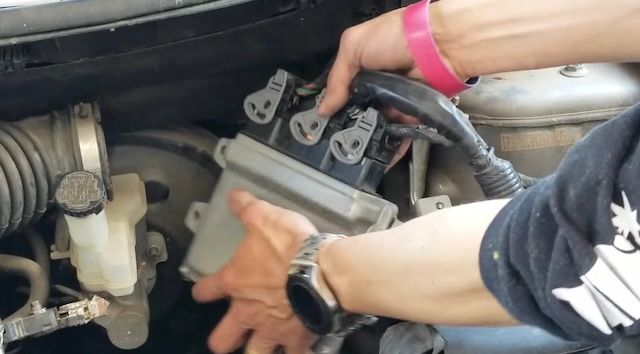
Image Credit: MacDaddyPimpping
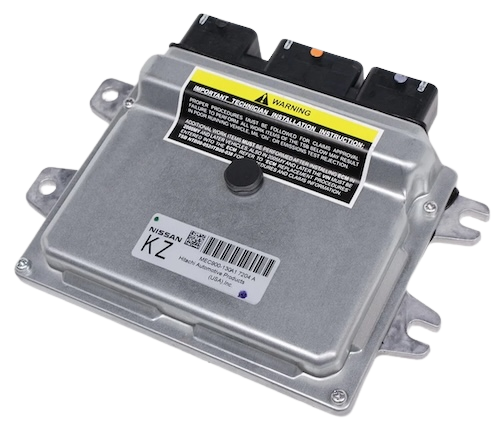
The ECM serves as the "brain" of internal combustion engine operation. Without an ECM, modern automobile engines would never be able to operate efficiently and cleanly enough to meet stringent government fuel economy and emissions standards. The ECM and a network of sensors are responsible for monitoring engine operation. A system known as On-Board Diagnostics (OBD) allows technicians and owners to see trouble codes from the ECM that assist with diagnosing problems. Some of the crucial functions overseen and managed by your Nissan ECM include:
- Sensor Input Data: The ECM relies on input from various sensors, such as throttle position and coolant temperature, to respond to the engine's performance demands and operating conditions in real time.
- Data Processing: The ECM collects and processes data from various inputs to precisely regulate engine air intake, fuel delivery, and ignition timing.
- Actuator Output Control: The ECM utilizes processed data to control components like intake plenums and variable valve timing, ensuring clean and efficient combustion across all operating conditions.
- Data Communications: Operating within the controller area network (CAN), the ECM communicates with other control modules within the vehicle. This high-speed data network enables the ECM and other controllers to exchange vital information such as vehicle speed, engine RPMs, and data from various sensors.
- Power Management: The ECM incorporates power management capabilities for both internal and external components. It efficiently manages internal power consumption and regulates specific voltage and resistance levels to operate sensors and actuators.
Whenever the ECM detects issues affecting any of these functions, it triggers and stores Diagnostic Trouble Codes (DTCs) in memory. These DTCs indicate that the engine is not operating within the specified emissions parameters. Moreover, the ECM can also generate DTCs to communicate internal hardware or software errors, voltage irregularities, or disruptions in CAN communications. The OBD interface permits the connection of a diagnostic tool to read stored DTCs for diagnosis.
Find OEM ECMs At Nissan Parts Plus
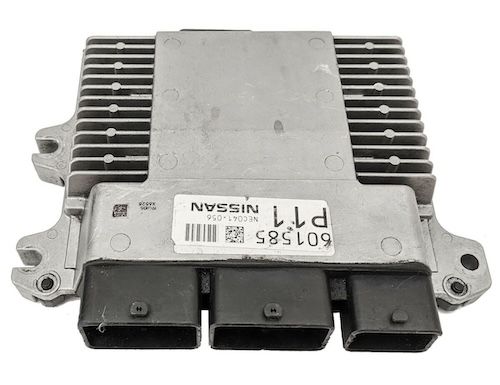
Have you diagnosed your Nissan with a bad ECM? Nissan Parts Plus will verify the correct, lowest-priced OEM replacement ECU for your Nissan. We have a free VIN decoder that will help you find exactly the parts you need. Order from Nissan Parts Plus because:
- We’ve been a family-owned Nissan dealership for over 50 years.
- We offer factory-direct genuine OEM Nissan parts and accessories at wholesale prices.
- We’re here to answer your questions and get you the right parts for your Nissan. Check out our FAQ or please contact us today!